Ready-made ERP systems like Odoo, SAP, and Oracle unify your company's operations in one place, but they come with recurring monthly subscriptions that stay with you for life. In this guide we compare the most popular systems with their real strengths and weaknesses, then explain when a custom ERP system that you fully own is the smarter and more cost-effective choice for your business in the long run.
What Is an ERP System and Why You Need It?
An Enterprise Resource Planning system (ERP) is a single platform that connects all your company's departments — accounting, inventory, sales, purchasing, human resources, and customer relations — into one unified database. Instead of scattered Excel files and systems that don't talk to each other, everyone sees the same numbers in real time, so manual errors disappear and decisions are built on accurate, up-to-the-minute data.
Every growing company reaches a moment when scattered tools become a burden that slows the work down. At this point an ERP becomes a necessity rather than a luxury, especially with the e-invoicing (ZATCA) requirements in Saudi Arabia that mandate structured accounting integration.
Odoo: Flexibility and Reasonable Cost
Odoo is among the most popular ERP systems in the Saudi market, and the most common among small and medium businesses thanks to its modular structure, where you pick only the modules you need. It covers accounting, inventory, point of sale, customer relationship management, and e-commerce.
✅
Strengths
Flexible modules, an open-source edition, a lower starting cost than global rivals, and a wide support community.
⚠️
Weaknesses
Deep customization needs specialized developers, and costs balloon as modules and users grow each year.
🎯
Best For
Startups and mid-sized companies that want a fast start and can tolerate some limits for the price.
SAP Business One: Enterprise Power
SAP is an established global name in the ERP world, and the Business One edition targets growing small and medium businesses. It stands out with integrated financial management, real-time analytics, a strong supply chain, and multi-currency support.
✅
Strengths
Enterprise-grade reliability, advanced analytics, high scalability, and a global reputation that reassures investors.
⚠️
Weaknesses
Very high licensing and implementation costs, a long rollout time, and it needs a specialized team to manage.
🎯
Best For
Medium and large companies with complex operations and large budgets.
Oracle NetSuite: Cloud and Global Scale
Oracle NetSuite is a fully cloud-based ERP aimed at companies that need advanced automation and global expansion. It covers financial management, inventory, order management, and analytics, with strong compliance support across multiple markets.
✅
Strengths
Fully cloud infrastructure, high automation, powerful reporting, and suited to growth across multiple countries.
⚠️
Weaknesses
An expensive annual subscription, and complexity that exceeds the needs of most local small and medium businesses.
🎯
Best For
Large, multinational, and fast-growing companies.
Microsoft Dynamics 365: Integration with the Microsoft Ecosystem
Dynamics 365 combines ERP and CRM in one platform, and stands out for its natural integration with Microsoft tools such as Office, Teams, and Power BI, with AI-powered analytics.
✅
Strengths
Integration with the Microsoft ecosystem, combined ERP and CRM, and AI in analytics.
⚠️
Weaknesses
High licensing costs, and its success depends on you already being inside the Microsoft environment.
🎯
Best For
Large companies that already rely on Microsoft products.
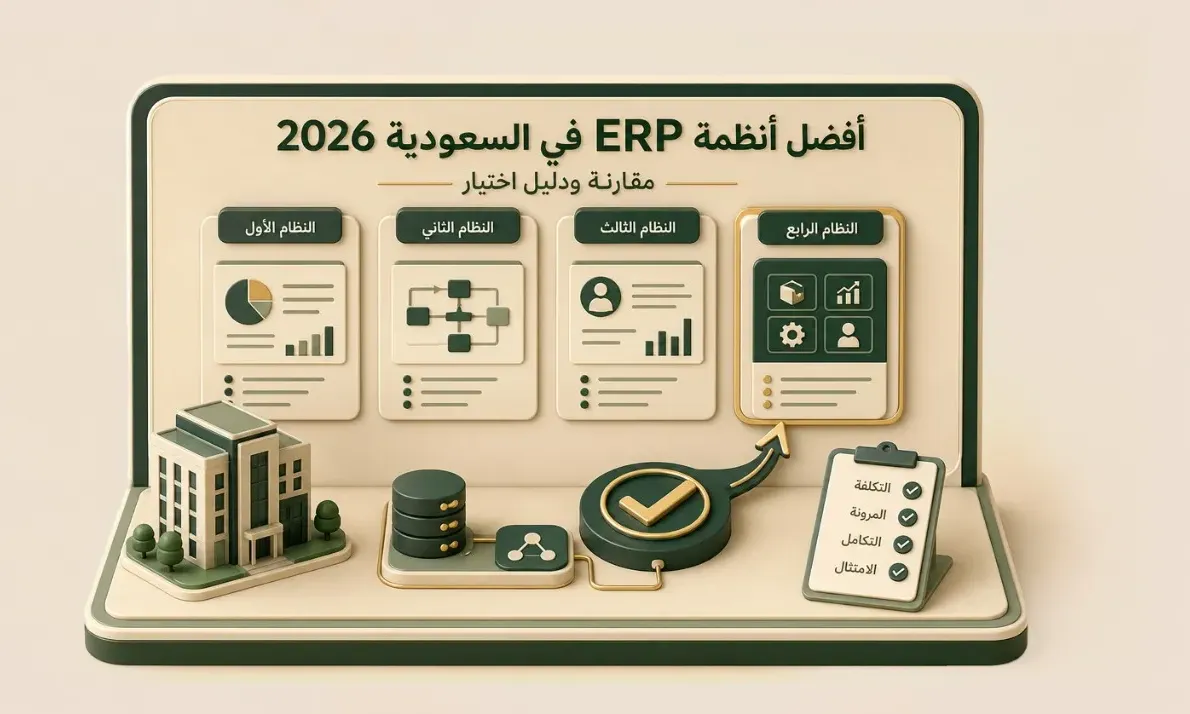
Comparison Table of the Four Systems
| System | Cost Model | Ease of Customization | Best For |
|---|---|---|---|
| Odoo | Tiered subscription by modules and users | Medium (needs developers) | Startups and mid-sized |
| SAP Business One | High licensing + implementation | Low and costly | Medium and large |
| Oracle NetSuite | Expensive annual subscription | Medium within platform limits | Large and global |
| Dynamics 365 | High licensing | Good within the Microsoft environment | Large (Microsoft environment) |
The Pain of Recurring Subscriptions: The Hidden Cost
The problem most comparisons never mention is that the price of a ready-made system doesn't stop at setup. You pay recurring fees that balloon as your company grows, because they are usually charged per user and per added module.
- Every new employee = an added monthly license cost.
- Every extra feature or module = a new subscription on top of the base one.
- Annual price hikes completely outside your control.
- Your data is locked inside a platform you don't own — and moving off it is costly and painful.
The Third Option: A Custom ERP You Fully Own
Between paying forever for a ready-made system that doesn't fit your business 100%, there's a third option most companies overlook: building a custom ERP system tailored exactly to your activity. You pay once for development, then the system becomes an asset you own — with no per-user subscriptions, and no features you pay for but never use.
This approach solves the root of the problem: you don't pay for complexity you don't need, you don't adapt to a system designed for another company, and your data stays yours and on your own server.
Ready-Made or Custom? The Decisive Comparison
| Criterion | Ready-Made (Subscription) | Custom (Ownership) |
|---|---|---|
| Cost | Recurring fees for life | A one-time development payment |
| Ownership | You rent, you don't own | The system is an asset you fully own |
| Fit to Your Business | You adapt to the system | The system is tailored to your business |
| Users | A cost per user | Unlimited users |
| Data | On the provider's servers | On your server and under your control |
| Scalability | Within platform limits | Fully flexible to your needs |
Why Choose Nasq4 to Build Your Custom System?
At Nasq4, we are a Saudi software company that has delivered many large technical projects, and we build custom ERP and CRM systems tailored entirely to your business — with high quality and competitive prices compared to the long-term cost of global subscriptions.
- A deep analysis of your operations before a single line of code is written.
- A system compliant with ZATCA and Saudi e-invoicing requirements.
- Full ownership of the code and data — with no lock-in to a platform.
- Ongoing support and development after delivery.
Learn more about our services in business automation systems for Saudi companies, about our build methodology in building an ERP system: steps and ideas, and how artificial intelligence raises the efficiency of your business automation.
How We Build Your System Step by Step
Discovery and Analysis
We sit with you to understand your operations, departments, and real pain points.
Design and Structuring
We map the system structure and the modules you actually need, with nothing extra.
Development and Integration
We build the system and connect it to your current tools, payment gateways, and invoicing.
Training and Delivery
We train your team and hand you the system fully owned by you.
Support and Development
We stay with you through updates and new features as your business grows.