
Imagine a store that sells a product in-store while its website still lists it as “in stock”; a customer orders it online only to discover it’s out of stock. Or a customer who makes a purchase in-store, yet there’s no record of it in their digital account. This is the daily chaos caused by a point-of-sale (POS) system that’s disconnected from the rest of your systems. Integrating your POS with your digital applications—your store, your app, and your systems—brings it all together into a single, seamlessly integrated ecosystem: real-time, synchronized inventory, unified customer data, and a seamless shopping experience across all your channels. In this guide, we’ll show you how integration transforms the chaos of separate systems into a seamless, integrated system.
1. The Problem with Disconnected Systems
When each system operates in isolation—the point-of-sale system at the branch, the online store, and accounting—daily problems arise that cost you time, money, and customers:
📦
Inventory errors
Selling a product that’s out of stock or displaying an unavailable item frustrates the customer.
🔁
Duplicate Work
Manually entering data into each system wastes time.
👤
Scattered customer data
No complete view of the customer across branches and online.
📊
Inaccurate reports
Scattered figures that are difficult to compile for sound decision-making.
2. What does point-of-sale (POS) system integration mean?
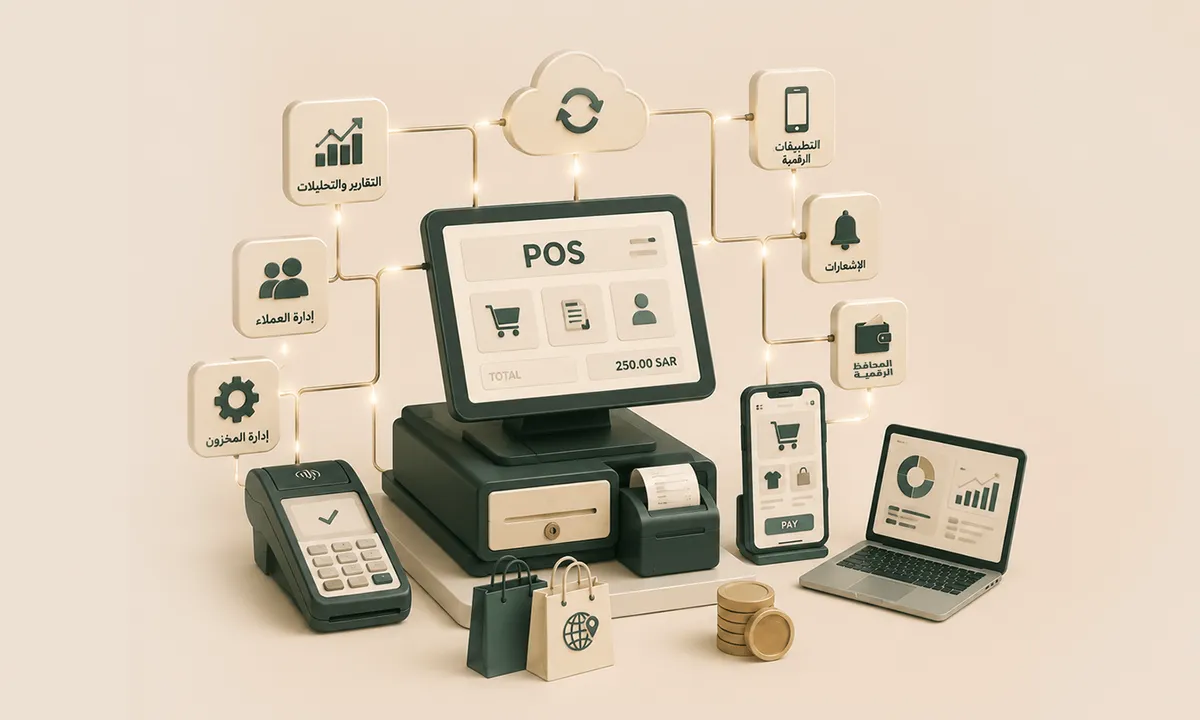
Point-of-sale integration means connecting the cash register system in your branches to your other digital assets—your online store, your app, and your accounting and inventory systems—so that data flows automatically between them. Instead of isolated systems that don’t communicate, you’ll have a single ecosystem: every sale at a branch immediately updates the store’s inventory and the customer’s record in the system. The result is a unified view, greater efficiency, and a better customer experience.
3. Benefits of Integrating POS with Your Digital Apps
Integration isn’t a technological luxury—it’s a leap forward in your business efficiency. Tangible benefits become apparent quickly:
🔄
Synchronized inventory
Real-time updates across all channels prevent sales errors.
👤
A Single, Unified Customer Profile
A complete customer history across both in-store and online channels.
⚡
Greater Efficiency
No duplicate entries or manual errors.
📊
Unified Reports
A complete overview of your sales from all channels in one place.
🎁
Unified loyalty
Points and offers that work both in-store and online.
💰
Accurate Accounting
Automatically link sales to accounting and invoicing.
4. What integrates with the POS system?
The power of integration lies in its comprehensiveness. The POS can be linked to your entire ecosystem of systems and tools:
- Online store: Synchronize products, prices, and inventory between the store and online.
- Mobile app: Unify the customer experience and loyalty programs across the app and in-store.
- Inventory system: Automatically update quantities with every sale.
- Accounting system: Link sales to invoices and financial reports.
- Customer Relationship Management (CRM) system: Create a unified record for each customer and their transactions.
This integration is part of a broader ecosystem of business management systems. Learn about our comprehensive services in sales, customer, and point-of-sale management systems (ERP – CRM – POS).
5. Real-Time Inventory Synchronization
At the heart of successful integration is real-time inventory synchronization. This feature alone solves the biggest problems facing multichannel stores and prevents customer loss:
⚡
Instant Updates
Every sale across any channel is deducted from inventory immediately.
🚫
Prevent Double Sales
You won’t sell a product that’s out of stock in another channel.
🔔
Out-of-Stock Alerts
Automatic notification when quantities run low.
🏬
Multi-Location Inventory
A unified view of inventory across all branches and warehouses.
6. Unified Customer Experience (Omnichannel)
Today’s customers move seamlessly between stores, websites, and apps, and expect a consistent experience. Integration achieves this omnichannel experience, which has become the standard for competition:
- Buy online and pick up at the store: a flexible experience customers love.
- Unified loyalty: Points and rewards are earned and redeemed across all channels.
- Unified purchase history: Customers can view all their transactions in one place.
- Consistent offers: The same prices and offers in-store and online.
- Flexible returns: Return items purchased online at the store, and vice versa.
Why does this matter? Customers don’t think in terms of “channels”; they see your brand as a single entity. A unified experience builds their trust and loyalty, while a disjointed experience (different prices or a loyalty program that doesn’t work online) frustrates them and causes them to leave. Integration is what makes your brand a single, seamless experience.
7. How do you successfully implement point-of-sale integration?
Successful integration requires professional planning and execution to avoid synchronization issues. Steps to ensure success:
🎯
Identify your systems
Which systems do you want to connect (store, app, accounting)?
🔗
Integration via API
A secure and flexible connection ensures accurate data flow.
🧪
Test the synchronization
Ensure inventory and data accuracy before launch.
📚
Train your team
Equip your team to use the unified system efficiently.
We build and integrate your digital systems into a unified ecosystem. Learn about our e-commerce and app development services, where we build a unified system that seamlessly connects your points of sale with your digital assets.